


2026 Nilotica Shea Festival Report

Updated: Aug 2
Saturday, 30 May 2026
Okere City, Otuke District, Uganda
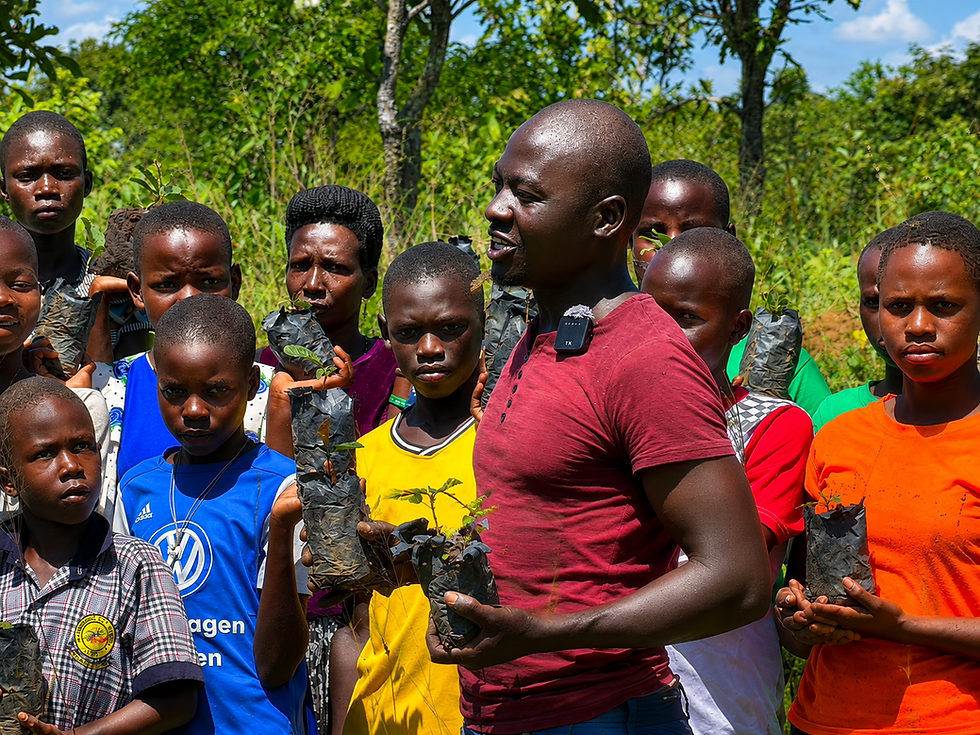
The festival started by engaging children in planting of shea trees
EXECUTIVE SUMMARY
The Nilotica Shea Festival 2026 was held on Saturday, 30 May 2026 at Okere City in Otuke District, northern Uganda. The event, organized by Okere City under the theme "Shea for Heritage, Healing and Hope," brought together 5,000 farmers, community leaders, government officials, development partners, private sector actors, and media on the occasion of World Shea Day 2026.
The day marked a historic milestone with the official launch of a state-of-the-art cold-press Nilotica shea butter processing factory at Okere City, equipped with German cold-press machinery and representing a transformational step toward positioning northern Uganda as a manufacturing powerhouse for Nilotica shea.
The festival brought together over ten organizations working across the Nilotica shea value chain and featured a high-level conference on unlocking the global potential of Nilotica shea, tree planting activities, a regenerative agriculture showcase, cultural performances, and a musical concert headlined by prominent Lango artists.
Key outcomes included commitments toward a Geographical Indication (GI) registration for Nilotica shea under the name WALTEK Nile Shea, the formation and growth of NiSA (Nilotica Shea Alliance), confirmation of the first international shipment of Okere shea to the USA, and joint pledges to intensify shea conservation across the greater northern Uganda shea belt.
BACKGROUND & PURPOSE
The demand for shea products globally has increased by 600% over the past 20 years, yet supply has not kept pace. This imbalance creates both an urgent conservation challenge and a significant economic opportunity for communities in the Nilotica shea belt spanning northern Uganda, South Sudan, and Chad. Okere City, founded and led by Ojok Okello, has emerged as a key actor in the Nilotica shea value chain working to connect Northern Ugandan shea farmers with premium global markets while investing in tree conservation, community empowerment, and processing infrastructure. The festival was convened to celebrate the factory launch, mark World Shea Day, and accelerate multi-stakeholder collaboration.
HIGHLIGHTS OF EVENT PROCEEDINGS
TRADITIONAL SHEA OIL AND FOODS PREPARATION
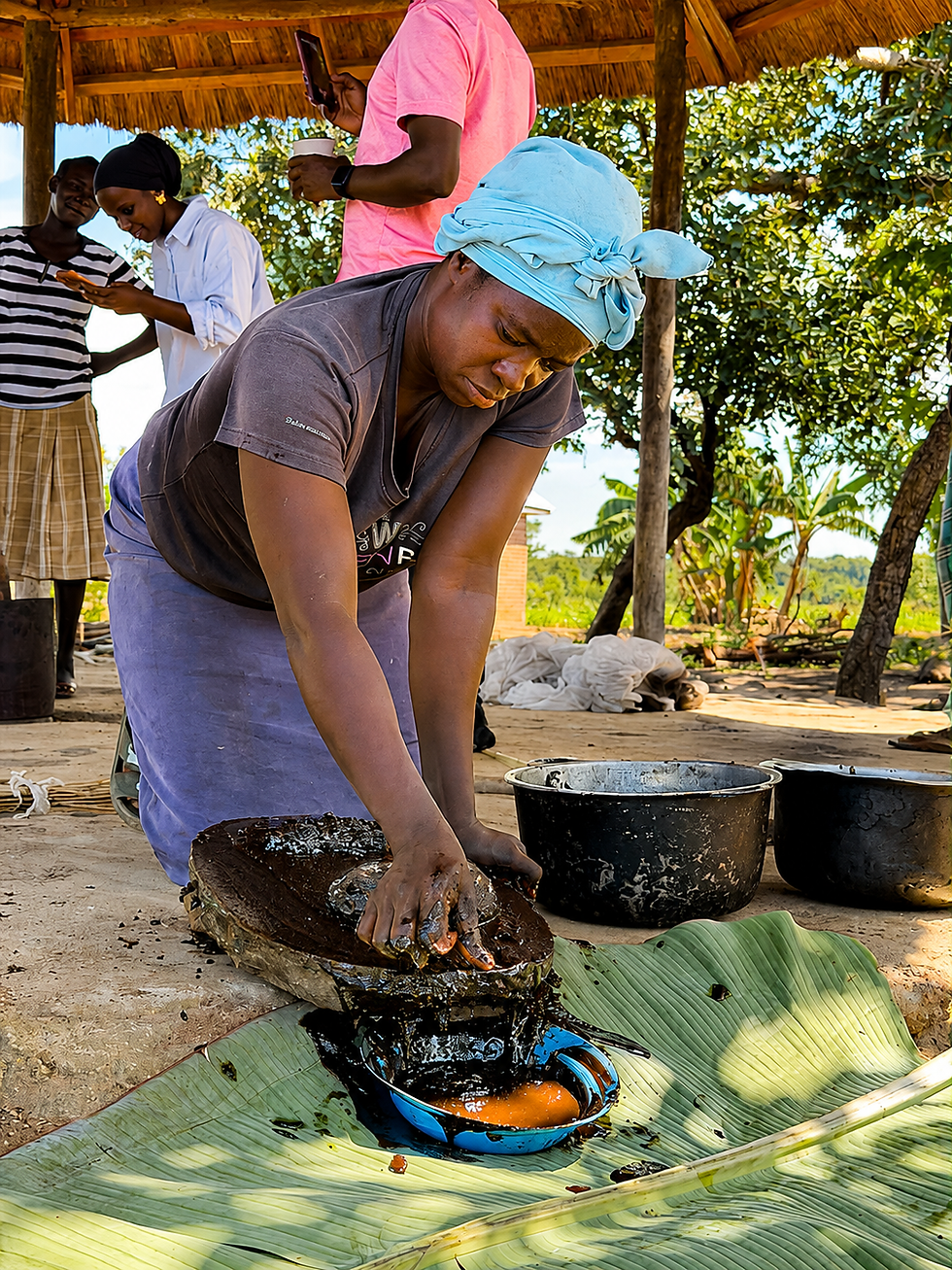
A dedicated Shea Foods area showcased the culinary heritage and nutritional versatility of Nilotica shea, an aspect of the crop that is frequently overlooked in conservations dominated by the cosmetics industry. Visitors participated in the processing of edible heat-produced shea oil. Later sampled traditional foods prepared using shea oil and shea-based ingredients, demonstrating that shea is a cornerstone of the food culture of Northern Uganda used in cooking, nutrition, and community nourishment for generations. The shea foods showcase brought the “Heritage” dimension of the festival theme to life, grounding the day’s global ambitions in the lived traditions of local communities. It also opened conservations about the potential for shea-based food products to enter both domestic and regional markets as a distinct, culturally rooted category.
MEDIA ENGAGEMENTS & PRESS BRIEFINGS

The day involved a structured media engagement drawing representatives from NTV Uganda, NBS Television, QFM, Oroma TV, Voice of Lango FM, and several other outlets. Journalists and reporters were briefed on the significance of the Nilotica Shea Festival 2026, the factory launch, and the broader mission of Okere City. Key messages communicated included the global premium positioning of Nilotica shea, the urgency of shea tree conservation, and the role of the factory in transforming the local economy. The media presence ensured that the day’s milestones particularly the factory launch and the GI announcement reached national and regional audiences, extending the festival’s impact well beyond Otuke District.

COMMUNITY SHEA TREE PLANTING

A community-led shea tree planting activity took place from engaging festival attendees, community members, partner representatives, and local leaders in a symbolic and practical act of conservation. The planting formed part of Okere City’s broader commitment to reversing the decline of the Nilotica shea tree population across the greater northern Uganda shea belt. The activity reinforced a core message of the day: that the future of Nilotica shea depends not only on markets and processing infrastructure, but on the continued existence and growth of the trees themselves. Participants were encouraged to continue planting in their communities and to regard every shea tree as a long-term economic asset for their households and region.
The Community shea tree planting marked the beginning of a plan to plant 1,500 trees in the given garden. Unlike previous years where people relied on bats to support shea tree planting, this restoration effort is earmarked to increase shea trees for future conservation. Different actors in the shea value chain including partners and community members participated in the planting exercise.
During the tour of the shea seedlings nursery, Ojok explained the process of growing the seedlings. Through the small five-day window for growth, they have managed to have about 70% germination rate for shea seedlings. The objective is to plant about up to a million shea trees by 2030. Noted that the five years of watching over the shea seedlings can be painful since it doesn’t show visible growth while forming a form root system. Thus, conduct capacity building to equip farmers to take care of their seedlings properly. Additionally, farmers that plant and converse shea trees are incentivized through carbon credit rewards.

REGENERATIVE AGRICULTURE SHOWCASE
Okere City hosted a Regenerative Agriculture Showcase demonstrating practical, low-input farming systems that are compatible with shea tree conservation and long-term landscape health. The showcase featured four live demonstrations:
● Agroforestry systems: Demonstrating how shea and other indigenous trees can be integrated with food crops, showing farmers how to diversify income while keeping trees in the landscape. Fruit trees and other indigenous species have been distributed to farmers. As of April 2026, had 60,000 different tree seedlings and half of this has been distributed to farmers at the onset of the rainy session.
● Apiary and beekeeping: Showcasing honey production as a complementary income stream for shea farmers, while highlighting the role of bees in pollinating shea trees and supporting ecosystem health. 100 bee hives installed and 40 of these colonized already. The bees help shea trees produce more shea while also making the honey produced sweater.
● Sustainable farm practices using low-tillage oxen ploughing: Demonstrating animal-powered, low-tillage cultivation methods that protect soil structure and reduce the need for chemical inputs, keeping production costs low for smallholder farmers.
● Organic pesticides and fertilizers: Introducing locally sourced organic inputs as alternatives to synthetic chemicals, aligned with the premium, natural positioning of Nilotica shea in global markets and the requirements of international buyers.
The showcase attracted significant interest from farmers and partners alike, reinforcing that quality shea production begins long before the nut reaches the factory and that the health of the landscape is inseparable from the health of the value chain.
CONFERENCE PROCEEDINGS

The high-level conference, convened from 11:00 AM to 2:00 PM under the theme Unlocking the Global Potential of Nilotica Shea, was opened by Ojok Okello (Okere City), who welcomed delegates and underscored the importance of the occasion. Pupils of Okere Nursery and Primary school entertained guests in songs and poems about shea conservation
Six panel discussions followed, each bringing a distinct perspective on how to position Nilotica shea as a premium global ingredient. Their perspectives were guided by questions from the moderator on key subjects.
Panelists and Contributors
Name | Organisation / Role | Topic / Contribution |
Ojok Okello | Okere City and Host | Opening remarks and conference moderation |
Arianna Day | CEO, Forested | Positioning Nilotica shea in global cosmetics & supply chain |
Lucy Mbabazi | MMM RwandAfrika | African regional market access |
Raymond Kakuba | NiSA Coordinator | Multi-stakeholder platform and value chain strengthening |
Santa Joyce Laker | Chairperson Acholi Shea Cooperative Society | Geographical Indication and community ownership |
Wabugo Michael | Uganda Registration Services Bureau (URSB) | GI registration process for Nilotica shea |
Solomon Etany | Palladium — Ecosystem Services Specialist | Shea tree restoration and climate smart jobs |
Simon Obong Opio | Adwari Sub-County, LC3 Chairperson | Local governance and conservation challenges |
Boniface | Otuke District Forestry Officer | Enforcement and community sensitisation |
Eric Masiga | RDC, Otuke District | Government support, conservation and factory supply |
Nilotica Shea Global Market Positioning — Arianna Day (Forested)

Arianna, CEO of Forested, highlighted the two-year partnership between Forested and Okere City, which has focused not only on bringing Northern Uganda shea to international markets but also on co-investing in landscape conservation and regenerative agriculture.
A landmark milestone was shared: in 2025, Okere City shipped its first container of Nilotica shea butter to the United States for Amika, a premium hair and body product company. Customer reception has been overwhelmingly positive. Arianna noted that while West African shea has long dominated global markets, Nilotica shea holds distinct competitive advantages i.e it is more moisturising and spreads more easily, giving it a natural edge in high-end cosmetics.
Arianna also noted that significant consumer education work is underway to build global awareness for Nilotica shea as a distinct and superior product category and called on farmers to continue producing quality nuts to sustain the momentum.
NiSA — Lydia Schubert & Raymond Kakuba

Lydia founded Mo Me Gen (Oils of Hope) and she is a also a founding member of NiSA. She moved to Germany 20 years ago and began creating markets for shea butter there. After identifying quality inconsistency and fragmentation as major barriers, she returned to Uganda and built a shea butter processing facility in Otuke in 2019. Although COVID-19 initially disrupted business plans, Mo Me Gen still remains a formidable brand in the nilotica shea sector in Uganda.
NiSA (the Nilotica Shea Alliance) is a multi-stakeholder platform bringing together shea value chain actors across Uganda, South Sudan, Ethiopia, CAR, and Chad. Its four pillars are:
1. Conservation of shea trees by addressing ongoing tree cutting while planting more
2. Quality improvement by harmonizing processes to achieve consistent, exportable quality
3. Enhancing market access by enabling collective market entry with a unified voice
4. Creating an enabling policy environment by advocating for supportive laws and regulations
Raymond Kakuba (NiSA Coordinator) stressed that a single unified, credible voice is essential for unlocking Nilotica’s global potential. He reported active work in Pader and Agago, training shea collector groups to formalize as cooperatives, in partnership with local government commercial officers.
Geographical Indication (GI) — Santa Joyce Laker & Wabugo Michael

Santa Joyce Laker, Chairperson of Acholi Shea Cooperative Society, underscored the importance of the shea belt to the identity of greater northern Uganda. She noted that Uganda has a precedent of assigning unique geographic products per region and that Nilotica shea must be owned and protected by the communities it comes from.
A compelling lesson was drawn from bark cloth in Buganda, a uniquely Ugandan product that was registered globally by a foreigner before Ugandans acted. The greater Northern Uganda shea belt spanning West Nile, Teso, Karamoja, Lango, and Acholi, is now working together to register collectively as WALTEK Nile Shea, to be filed with the World Intellectual Property Organization (WIPO).
Wabugo Michael from the Uganda Registration Services Bureau (URSB) confirmed active support for the GI process. URSB registers businesses and intellectual property rights, including geographical indications that protect products originating from specific regions with unique qualities. He cited Rwenzozi and Elgon arabica coffees and Buganda bark cloth as existing GI products and affirmed that Nilotica shea from the shea belt should be next.
He noted that a GI uplift all actors along the value chain, from tree to final consumer, and referenced the African Union’s description of geographical indications as “a sleeping giant” for African economies.
African Market Opportunity & Digital Economy — Lucy Mbabazi
Lucy Mbabazi, speaking in her capacity as MMM RwandAfrika and as a business partner with Okere City, highlighted that while much attention goes to European and American markets, Africa represents an enormous, untapped opportunity of 1.5 billion consumers across 54 countries. She emphasized the therapeutic value of Nilotica shea for children, particularly in the treatment of eczema, and expressed commitment to growing an intra-African market. She testified that she bought Okere Shea Butter to use on her daughter’s skin after years of battling eczema and trying all sorts of skin medicines. The good news is that after some tinkering with other organic essential oils with our shea butter as the base ingredients, her daughter’s skin completely healed. This inspired her to start her own skin care company which is one of our direct customers for the raw material.
On digital inclusion, she noted that the UN Better than Cash Alliance where she is the Executive Director is working toward 2030 to ensure all people including smallholder shea farmers are equitably served through the digital economy. She committed to partnering with Okere Shea Cooperative Society to digitally onboard its members, helping farmers benefit from digital financial services and market linkages.
Palladium / Climate Smart Jobs Programme — Solomon Etany

Solomon Etany, Ecosystem Services Specialist at Palladium, explained that Palladium implements the Climate Smart Jobs programme in Uganda, aimed at building resilience and livelihoods of smallholder farmers in the face of climate change.
Palladium conducted a thorough value chain study before designing its interventions and identified four core challenges:
Challenges Identified | Solutions Deployed |
• Declining shea tree population due to cutting for short-term income• Minimal benefits for farmers who do conserve shea trees• Unstructured markets with actors operating in silos• Nilotica shea unknown in world markets | • Shea tree restoration: working with 1,000+ farmers to plant over 70,000 seedlings, integrated with other income-generating trees• Farmer-managed conservation with Okere Shea Cooperative Society• Market strengthening through NiSA; capacity building including a study trip to Ghana• Climate-smart innovations and advocacy along the shea belt |
Solomon noted that scaling shea conservation requires private sector engagement because market incentives align with conservation goals. He called for an ecosystem approach of protecting not just shea trees but all fruit trees in the landscape and congratulated Okere upon the factory launch.
Local Governance Perspectives
Simon Obong Opio, LC3 Chairperson for Adwari Sub-County, acknowledged both challenges and progress. He noted that the President of Uganda issued a directive in 2019 banning shea tree cutting, and that local leaders are working to implement it. However, poverty remains a primary driver of violations trees are cut for immediate income. On the day of the festival itself, three individuals were apprehended for cutting shea trees and taken into custody. He expressed confidence that with continued sensitization and economic opportunities such as the factory community attitudes will shift.
Boniface, Otuke District Forestry Officer with 15 years of service, reported that 40 people have been arrested for cutting down shea trees by the law enforcement department in Otuke District as of May 2026. to date. He cited severe resource constraints only one motorbike is available to cover the entire Otuke District. He appealed to citizens to support enforcement efforts and called on communities to bring their shea nuts to the factory rather than cutting trees.
Remarks from the RDC — Eric Masiga

Eric Masiga, Resident District Commissioner of Otuke (in post since September 2025), thanked Okere City for the invitation and commended the community’s warmth. He noted that the destruction of shea trees had reached alarming levels before government intervened with regulations and penalties.
Masiga welcomed the factory as a gamechanger: with a local processing facility now operational, farmers have a guaranteed buyer for their shea nuts, removing one of the main economic incentives to cut trees. He pledged continued government support to entrepreneurs and urged all local leaders to take the front line in tree safeguarding. He also commended Ojok Okello for promoting Lango culture and the protection of shea trees.
FACTORY LAUNCH & HERITAGE CELEBRATION
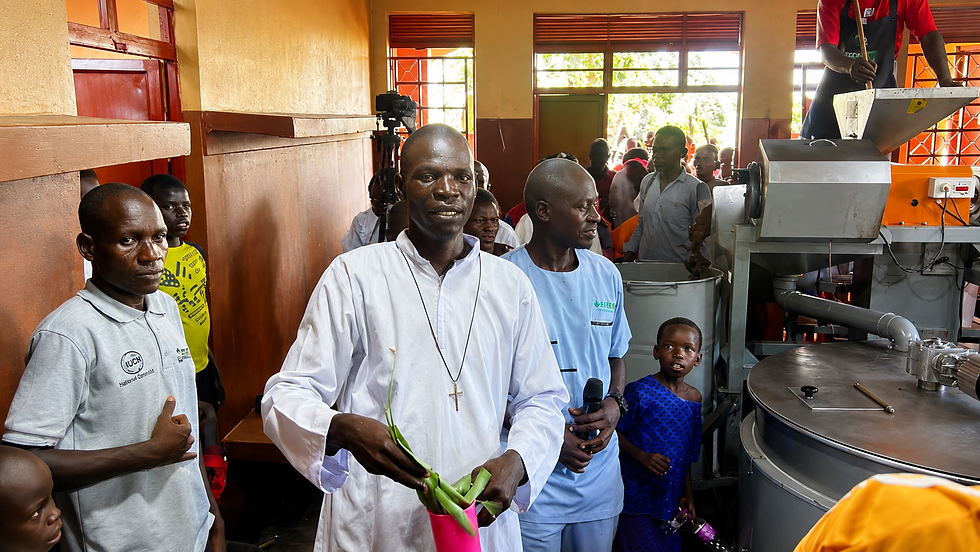
The afternoon culminated in the official launch of the Nilotica shea cold-press processing factory at Okere City. The facility is equipped with state-of-the-art German oil cold-press machinery. The facility is one of the most modern shea processing facilities in the region.
The launch ceremony included:
• An opening mass of 30 minutes led by Okere Catholic Church
• Cultural performances by local school children and community groups
The factory represents the culmination of years of groundwork by Okere City and its partners to build an integrated, community-owned shea value chain in Northern Uganda.
LUO TRADITIONAL MDD & CULTURAL CELEBRATION

One of the most celebrated moments of the day was the Luo Traditional Music Dance Display (MDD), which brought together local school groups and several community troupes in a vibrant showcase of Lango cultural heritage. Dancers performed in traditional attire to the rhythms of indigenous instruments, including the thumb piano, in a display that drew enthusiastic participation from attendees. The MDD was not merely a performance, it was a declaration that the story of Nilotica shea is inseparable from the culture of the people who have cultivated and depended on it for generations. Cultural leaders used the moment to reinforce the message that protecting the shea tree is an act of cultural preservation as much as economic development. The performance set the tone for the Heritage Celebration that followed and served as a powerful reminder that Okere City’s mission is rooted in community identity, not just commerce. The evening reinforced Okere City’s vision: that economic transformation and cultural pride are not competing forces, but two sides of the same story.

KEY FINDINGS FROM THE FESTIVAL
i. Conservation Urgency
Despite growing awareness, shea tree cutting remains a critical challenge driven by poverty and limited livelihood alternatives. While the local authority is trying to facilitate enforcement as said by the District Forestry Officer that 40 culprits had been arrested as of May 2026, enforcement still remains weak. Also, the different speakers emphasized that conservation cannot succeed through enforcement alone it requires economic incentives that make the living tree more valuable than the cut one.
ii. The Nilotica Advantage
Multiple speakers highlighted that Nilotica shea has inherently superior qualities compared to West African shea it is more moisturising and more spreadable. This gives it a natural premium positioning in global cosmetics markets. The challenge is consumer education: the market must be informed that Nilotica is a distinct and superior category.
iii. Collective Action is non-negotiable
A recurring theme across all panel discussions was the necessity of collective action. Individual actors cannot achieve the scale, quality consistency, or market credibility needed to compete globally. NiSA exists precisely to fill this coordination gap, and the WALTEK Nile Shea GI registration process embodies the same principle: collective ownership is stronger than fragmented individual claims.
iv. The Factory Changes Everything
The launch of the cold-press factory at Okere City is seen by all stakeholders as a transformational development. It provides local farmers with a direct, reliable buyer for their shea nuts and in doing so, removes one of the most significant economic drivers of tree cutting. Partners and government representatives alike urged the community to supply the factory to ensure its long-term viability.
v. Africa as a Market, Not Just a Producer
Lucy Mbabazi’s contribution reframed the conservation around Africa’s role. The 1.5-billion-person African market represents a major opportunity that the sector has largely overlooked in its focus on Europe and North America. Building intra-African markets for Nilotica shea particularly for its skin and hair benefits is a strategic priority.
KEY OUTCOMES AND COMMITMENTS

Factory Launch
• State-of-the-art German cold-press machinery installed Nilotica shea and the factory officially launched at Okere City, Otuke District on 30th May 2026.
• A export contract of 18 metric tons signed between Okere Shea Coop and Forested, represented by their CEO, Arianna Day.
Market Development
• Forested committed to continued market development and consumer education for Nilotica shea in North American markets
• MMM RwandAfrika committed to growing the Rwandan and broader African market for Nilotica shea butter
• Lucy Mbabazi committed to integrating Okere Shea Coop members into the UN Better than Cash Alliance digital economy framework by 2030.
GI Registration
• Districts of the greater northern Uganda shea belt agreed to proceed with collective GI registration as WALTEK Nile Shea
• URSB committed to supporting the GI registration process at national and WIPO levels
• Acholi Shea Cooperative Society, URSB, and belt districts engaged on the process
Conservation
• Palladium committed to continuing shea restoration with 1,000+ farmers and 100,000+ seedlings
• Local government committed to intensifying enforcement and community sensitisation
• RDC Eric Masiga pledged continued government support and called on leaders to take frontline roles in tree protection
• Forestry officer to proceed with next quarterly community sensitisation campaign
NiSA Strengthening
• NiSA to continue expanding cooperative training within the shea belt.
• NiSA to work toward quality harmonisation and a unified credible voice for Nilotica shea internationally
RECOMMENDATIONS
i. Accelerate the WALTEK Nile Shea GI registration: Prioritise filing with URSB and WIPO. This is the single most powerful collective action the shea belt can take to protect and add value to the resource.
ii. Increase funding for enforcement and forestry: Otuke District Forestry operates with a single motorbike. Resource constraints undermine even committed officers. Partners and government should prioritise logistical support.
iii. Link farmer incomes directly to shea conservation: Expand models like Palladium’s farmer-managed conservation, where farmers are financially rewarded for protecting and planting trees, creating economic incentives that enforcement alone cannot achieve.
iv. Build the African market deliberately: Develop targeted campaigns for the Rwandan, East African, and broader African markets.
v. Ensure the factory has a reliable nut supply: All actors like government, NGOs, farmers, cooperatives must rally around the factory as the anchor of the local economy. Factory failure due to insufficient supply would set back the entire sector.
vi. Digitally onboard shea farmers: Partner with the UN Better than Cash Alliance to ensure shea farmers are part of the digital economy, enabling better market access, transparent pricing, and digital financial services.
vii. Invest in consumer education globally: Nilotica shea’s superiority is not yet well understood. Forested, NiSA, and partners should invest in storytelling and consumer education campaigns in international markets.
Closing Remarks
The Nilotica Shea Festival 2026 demonstrated the extraordinary depth of commitment and collaboration that has developed around Nilotica shea in Uganda and beyond. From community farmers to international cosmetics brands, from district forestry officers to UN agencies, the range of actors aligned around a shared vision was remarkable.
The factory launch at Okere City is not merely an industrial milestone it is a symbol of what community-led, partnership-driven economic development looks like. Ojok Okello and Okere City have created something that belongs to the region, serves its people, and has the potential to put northern Uganda’s shea on the world map.
The road ahead requires sustained effort: conservation must be intensified, GI registration completed, markets developed on multiple fronts, and farmers empowered to see themselves as stewards of a globally significant natural resource. The momentum from this festival must be carried forward.

Comments